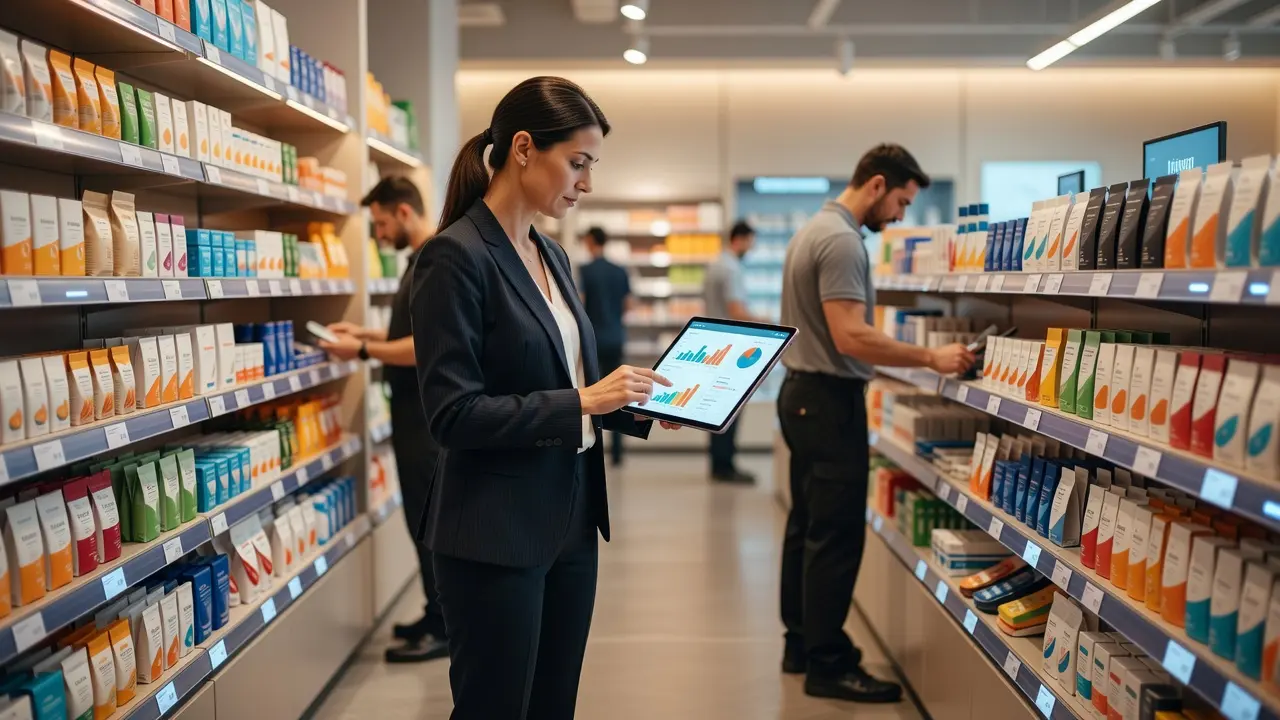
🛒 AI is reshaping retail faster than any technology since e-commerce itself. This complete guide covers the best AI tools for retail teams in 2026 — from demand forecasting and dynamic pricing to personalization engines, customer service automation, and in-store analytics — with real pricing, ROI data, and a clear decision framework for every retail operation size.
Last Updated: August 17, 2026
Retail is one of the fastest AI-adopting industries on the planet — and the numbers make clear why. McKinsey estimates that generative AI alone could unlock $240–$390 billion in value for retailers globally, through improved personalization, automated content generation, and enhanced customer service. AI-powered personalization delivers a 5–15% revenue lift for retailers who implement it correctly. AI-driven demand forecasting reduces inventory carrying costs by up to 30%. And 79% of brands report that AI-driven conversational commerce has directly increased their sales. In 2026, AI is not a competitive advantage in retail — it is rapidly becoming the baseline for operational competitiveness.
The challenge for retail teams is not deciding whether to use AI — it is knowing which tools actually deliver results, which platforms are worth the investment at each stage of growth, and how to sequence adoption without disrupting operations. The retail AI market spans dozens of point solutions across inventory, pricing, personalization, customer service, marketing, and in-store operations — and not every platform is right for every retailer. A Shopify merchant with 10,000 monthly orders needs different tools than a 500-store enterprise chain. A pure-play e-commerce brand has different priorities than an omnichannel retailer managing both physical and digital inventory.
This guide cuts through the noise and gives retail leaders, operations managers, e-commerce directors, and merchandise teams the specific tools they need. We cover seven retail AI use case categories — demand forecasting and inventory, dynamic pricing, personalization engines, customer service automation, marketing automation, in-store analytics and operations, and all-in-one platforms for SMB retailers — with real pricing data, named platform comparisons, ROI benchmarks, and a clear decision framework for matching tools to your operation size and priorities. For strategic context on how AI is transforming retail at the sector level, see our AI in Retail overview. For broader e-commerce AI context, our AI in E-Commerce guide covers the full digital commerce landscape.
For a deeper look at how AI is transforming retail operations beyond tool selection — covering in-store loss prevention, inventory intelligence, and the workforce implications of retail automation — our AI in Retail operations guide covers the full 2026 implementation playbook for store managers, operations directors, and retail technology leaders.
📖 New to AI terminology? Visit the AI Buzz AI Glossary — 65+ essential AI terms explained in plain English, each linking to a full in-depth guide.
🛒 1. Why Retail Teams Are Prioritizing AI in 2026
The retail sector entered 2026 under simultaneous pressure from three directions: margin compression from rising operational costs, consumer expectation inflation driven by AI-native shopping experiences, and competition from AI-first pure-play retailers who are moving faster than traditional operators can match. These three forces have made AI adoption in retail less of a strategic choice and more of a survival imperative for mid-market and enterprise retailers — and a growth lever that smaller, agile operators are using to punch above their weight class.
The adoption data confirms the urgency. According to NVIDIA’s State of AI in Retail and CPG 2026 report, retail and consumer goods are among the fastest-adopting sectors for AI customer service, with a 26% compound annual growth rate. Adobe Analytics found that AI-referred shoppers converted 31% higher than average during the 2025 holiday season, and that generative AI traffic to U.S. retail sites grew 4,700% year-over-year during the same period. Gorgias’s State of Conversational Commerce 2026 reports that 71% of brands are likely to hire employees dedicated to AI e-commerce functions within the next twelve months — a clear signal that AI is moving from experimental to operational across the industry.
The ROI data is equally compelling. AI-powered dynamic pricing delivers 5–10% margin improvements with a 6–12 month payback period — yet fewer than 15% of retailers currently use it, according to McKinsey. AI personalization leaders see revenue increases of up to 40% compared to average performers. Retailers using AI-powered demand forecasting report up to a 30% reduction in inventory carrying costs. These are not projections — they are documented outcomes from retailers already running these systems at scale. The gap between early adopters and the rest of the market is widening in 2026, and the tools covered in this guide are where that gap is being created.
The 2026 Retail AI Reality: The global AI-in-retail market is projected to reach $40.74 billion by 2030 at a 23% CAGR. McKinsey estimates generative AI could unlock $240–$390 billion in value for global retailers. AI personalization delivers 5–15% revenue lift. Demand forecasting AI reduces inventory costs by up to 30%. The question in 2026 is not whether to deploy retail AI — it is which tools to deploy first.
📦 2. Best AI Tools for Demand Forecasting and Inventory Management
Inventory is where retail margins live or die. Stockouts cost revenue. Overstock ties up capital and drives markdowns. The traditional forecasting approach — spreadsheets, historical averages, and buyer intuition — cannot process the volume of signals that modern demand forecasting requires: weather patterns, social media sentiment, local events, promotional calendars, economic indicators, and competitor pricing, all simultaneously and at the SKU level. AI demand forecasting platforms do exactly that, and the results are measurable within a single planning cycle.
Blue Yonder’s Luminate platform is the enterprise standard for AI-powered demand forecasting and supply chain planning. Used by some of the world’s largest grocery, general merchandise, and fashion retailers, Luminate generates demand forecasts at SKU and store level using machine learning that incorporates external signals including weather, promotions, and economic indicators alongside internal sales history. It covers demand forecasting, replenishment optimization, workforce management, and supply chain planning in a single integrated suite — making it the right choice for enterprise retailers who need end-to-end supply chain AI rather than a point solution. RELEX Solutions is the strong mid-market alternative, offering comparable forecasting accuracy with a faster implementation timeline and lower total cost of ownership than Blue Yonder for retailers in the 50–500 store range.
| Tool | Best For | Key Capability | Pricing | Rating |
|---|---|---|---|---|
| Blue Yonder (Luminate) | Enterprise chains with complex supply chains | SKU-level ML forecasting; replenishment; workforce management | Custom (enterprise contract) | ✅ Best in class |
| RELEX Solutions | Mid-market retailers 50–500 stores | Demand forecasting; space planning; promotional lift modeling | Custom (mid-market pricing) | ✅ Strong |
| Inventory Planner | Shopify and SMB e-commerce brands | AI replenishment recommendations; purchase order automation | From ~$99/month | ✅ Strong (SMB) |
| Zebra Technologies | Brick-and-mortar chains; store operations teams | AI inventory counts; task management; workforce scheduling | Custom (hardware + software) | ✅ Strong (in-store) |
| Shopify Magic | Shopify merchants (all sizes) | AI product descriptions; analytics insights; Sidekick assistant | Included in Shopify plans (from $39/month) | ✅ Best value (SMB) |
For Shopify merchants specifically, Inventory Planner is the standout choice for AI-driven stock management — it integrates natively with Shopify and generates AI replenishment recommendations based on sales velocity, lead times, and seasonality, reducing stockouts without requiring a dedicated supply chain team. Zebra Technologies takes a different angle, focusing on physical store operations: its AI-powered devices and software help store teams conduct inventory counts, manage tasks, and schedule workforce more efficiently — implementations typically self-fund through labor savings within 12 months, according to independent assessments. For teams evaluating how AI inventory tools connect to broader supply chain strategy, our AI in Supply Chains and Logistics guide covers the end-to-end picture.
💲 3. Best AI Tools for Dynamic Pricing and Price Intelligence
Pricing is the highest-leverage decision a retailer makes — and it is also the decision most retailers make with the least current data. Traditional pricing processes rely on quarterly reviews, manual competitor checks, and margin targets that cannot respond to real-time market conditions. AI pricing platforms change that equation: they ingest competitor pricing data, demand signals, inventory levels, and margin targets simultaneously, then recommend or automatically execute pricing decisions at the SKU level, continuously. The result is a 5–10% margin improvement with a 6–12 month payback period — yet fewer than 15% of retailers currently use these tools.
Competera is the leading mid-market and enterprise retail pricing platform in 2026, distinguished by its customer-centric pricing approach. Rather than simply matching competitors, Competera models how price changes at the category and SKU level affect customer perception and long-term loyalty, not just short-term margin. It is the right choice for retailers with large SKU counts and significant competitive pricing pressure. Revionics, now part of Aptos, specializes in AI-powered lifecycle pricing — covering regular price optimization, promotion planning, and markdown management in a single platform, making it particularly strong for apparel and general merchandise retailers who manage complex seasonal pricing cycles.
| Tool | Best For | Key Capability | Pricing | Rating |
|---|---|---|---|---|
| Competera | Mid-market and enterprise with large SKU counts | Customer-centric price optimization; demand modeling; competitive tracking | Custom (enterprise) | ✅ Best in class |
| Revionics (Aptos) | Apparel and general merch retailers; lifecycle pricing | Regular price, promotion planning, markdown management in one suite | Custom (enterprise) | ✅ Strong |
| Omnia Retail | Multi-channel retailers; pricing automation | Automated repricing; competitor monitoring; channel pricing rules | From ~$400/month | ✅ Strong (mid-market) |
| Pricefx | Enterprise; complex rebate and discount management | AI price optimization; rebate management; SAP/Salesforce integration | Custom (enterprise) | ⚠️ Complex implementation |
The most important insight from the 2026 retail pricing AI landscape is the emergence of agentic pricing. In 2026, leading platforms surface answers directly to pricing managers — “where am I losing margin to competitors this week?” — rather than requiring teams to navigate dashboards and connect data points manually. This shift from BI tool to autonomous pricing agent is what separates the current generation of pricing AI from its predecessors. For retailers evaluating their pricing strategy in the context of broader AI adoption, our AI in E-Commerce guide covers how pricing intelligence fits into the full digital commerce operating model.
🏭 Exploring AI in your industry? Browse the AI Buzz Industry Guide — 35+ in-depth sector guides covering how AI is transforming healthcare, finance, HR, legal, retail, manufacturing, and more.
🎯 4. Best AI Tools for Personalization and Customer Experience
Personalization is where retail AI delivers its most visible and most measurable ROI. McKinsey’s research consistently shows that personalization delivers a 10–15% revenue uplift for e-commerce businesses that implement it correctly — and personalization leaders see revenue increases of up to 40% compared to average performers. Product recommendations alone drive 25–35% of total e-commerce revenue at companies with mature AI personalization implementations. The platforms in this category do the work that no human merchandising team can match at scale: analyzing behavioral data, purchase history, real-time browsing patterns, and contextual signals to serve each customer a tailored experience across every touchpoint.
Bloomreach is the standout platform for retailers who want an agentic personalization system rather than a rule-based recommendation engine. It powers autonomous search, conversational shopping, and personalized marketing for over 1,400 brands including Bosch, Puma, and Marks and Spencer. Its native customer data platform removes the need for a separate CDP tool, unifying real-time customer and product data across every channel. Forrester validated a 251% ROI for Bloomreach implementations — the strongest independent ROI validation of any personalization platform currently in market. Dynamic Yield, now part of Mastercard, is the enterprise-grade alternative with particular strength in A/B testing, experience optimization, and integration with existing retail tech stacks.
| Tool | Best For | Key Capability | Pricing | Rating |
|---|---|---|---|---|
| Bloomreach | Mid-market to enterprise omnichannel retailers | Agentic search, conversational commerce, native CDP, 251% Forrester ROI | Custom (enterprise) | ✅ Best in class |
| Dynamic Yield (Mastercard) | Enterprise e-commerce with strong existing tech stack | Experience optimization; A/B testing; recommendations; behavioral targeting | Custom (enterprise) | ✅ Strong |
| Algolia | Retailers needing AI-powered site search | AI search and discovery; NeuralSearch; merchandising rules; analytics | From ~$500/month (usage-based) | ✅ Strong (search) |
| Nosto | Mid-market e-commerce; fashion and lifestyle brands | Product recommendations; onsite personalization; visual merchandising AI | From ~$500/month | ✅ Strong (mid-market) |
| Rebuy | Shopify brands; post-purchase upsell | AI-powered upsell, cross-sell, and personalized cart recommendations | From $99/month | ✅ Best value (Shopify) |
For Shopify merchants, Rebuy is the standout value play: it delivers AI-powered upsell and cross-sell recommendations natively within the Shopify checkout and post-purchase experience, with no need for a separate CDP or complex integration. Specialized tools like personalization platforms and pricing optimization often show measurable results within 90 days of implementation — a significantly faster payback cycle than the 12–18 months typical of comprehensive platform implementations. That makes personalization tools the right starting point for retailers who want fast, measurable AI ROI before committing to a larger platform investment.
💬 5. Best AI Tools for Retail Customer Service and Conversational Commerce
Customer service is the retail AI use case with the fastest and most visible ROI — and in 2026, it has also become the competitive battleground where AI-native retailers are separating themselves from traditional operators. The core opportunity is straightforward: the majority of retail customer service inquiries are repetitive and structured — order tracking, return status, product questions, shipping updates — and are perfect candidates for AI automation. Gorgias reports that AI automation now handles 60% of these inquiries with zero human input for brands using its platform. At that automation rate, a customer service team that previously handled 1,000 tickets per day can redirect 600 of those tickets to AI and focus human agents on the complex, high-value interactions that drive loyalty.
Gorgias is the dominant platform for e-commerce customer service AI in 2026, serving over 17,000 brands as Shopify’s only Premier Partner for customer experience. Its AI Agent handles two distinct job types: a Support Agent that resolves post-purchase questions (order tracking, returns, refunds, shipping updates) and a Shopping Assistant launched in 2026 that converts digital visitors into buyers. Gorgias bills by ticket volume rather than seats — helpdesk plans from $10/month Starter to $750+/month for high-volume brands, with AI-resolved tickets billed at an additional $0.90–$1.00 per conversation. That per-resolution pricing model is worth scrutinizing: it delivers clear ROI when AI resolves complex, action-oriented tickets (returns, replacements, order modifications), but can feel expensive when used primarily for simple FAQ responses that cheaper chatbots handle adequately.
| Tool | Best For | Key Capability | Pricing | Rating |
|---|---|---|---|---|
| Gorgias | Shopify brands scaling past $5M ARR | AI Support + Shopping Agent; 60% automation; Shopify Premier Partner | $10–$750+/month + $0.90–$1.00/AI ticket | ✅ Best in class (Shopify) |
| Zendesk AI | Enterprise and mid-market omnichannel retailers | AI triage, intelligent routing, agent assist, self-service automation | From $55/agent/month (AI add-on) | ✅ Strong (enterprise) |
| Tidio Lyro | Small and growing e-commerce teams | AI chatbot; live chat; Lyro AI handles up to 70% of inquiries | Free plan; paid from $29/month | ✅ Best value (SMB) |
| Shopify Inbox | Shopify merchants starting with AI support | Free native Shopify chat; AI-suggested replies; order status integration | Free (included in all Shopify plans) | ✅ Best free option |
The practical decision between Gorgias and Tidio comes down to operation size and ticket complexity. Tidio’s Lyro AI handles up to 70% of inquiries for small and growing e-commerce teams at a fraction of Gorgias’s cost — it is the right starting point for brands under $5M in ARR. Gorgias becomes the correct choice once a brand is scaling past $5–10M ARR and needs action-oriented AI (autonomous returns, order modifications, replacements) rather than just FAQ automation. Shopify Inbox is the right answer for merchants who are not yet ready to invest in a dedicated customer service platform — it is free, native, and handles order status inquiries competently. For retailers deploying conversational AI at scale, our AI in Customer Service guide covers the governance framework and human-in-the-loop design considerations that should underpin any customer-facing AI deployment.
📧 6. Best AI Tools for Retail Marketing Automation
Marketing automation is the retail AI use case where the ROI is most measurable and most immediate. AI-powered email and SMS platforms analyze purchase history, behavioral signals, and lifecycle stage to send the right message at the right time — automatically, at a scale no human team can match. McKinsey data shows that AI-driven personalized marketing delivers a 10–30% improvement in marketing spend efficiency. AI-powered predictive analytics for customer segmentation improve campaign ROI by 10–25%. And retailers using AI for marketing automation report a 15–20% increase in lead conversion rates. These numbers are why marketing automation is typically the first retail AI investment that delivers clear, attributable ROI.
Klaviyo is the dominant retail marketing automation platform in 2026, used by over 150,000 businesses across e-commerce and retail. Its AI capabilities span predictive customer lifetime value modeling, AI-driven product recommendations embedded in email and SMS, behavioral segmentation that updates in real time, and a generative AI subject line and content assistant. Klaviyo’s deep Shopify and e-commerce platform integrations give it an edge over general marketing automation tools for retail specifically — it reads and acts on cart abandonment, purchase behavior, browse history, and order events natively. Attentive is the leading SMS-first alternative, particularly strong for brands whose customers prefer text over email — it uses AI to optimize send timing, message content, and segmentation specifically for high-engagement SMS marketing.
| Tool | Best For | Key Capability | Pricing | Rating |
|---|---|---|---|---|
| Klaviyo AI | E-commerce and retail email and SMS marketing | Predictive CLV; AI segmentation; product recs in email/SMS; cart recovery | Free up to 250 contacts; paid from $20/month | ✅ Best in class |
| Attentive | SMS-first retail brands; high mobile engagement | AI SMS optimization; send-time intelligence; two-way SMS conversations | Custom (usage-based) | ✅ Strong (SMS) |
| Yotpo | E-commerce brands; reviews and loyalty automation | AI review generation; loyalty programs; SMS + email; UGC automation | Free plan; paid from $15/month | ✅ Strong (reviews + loyalty) |
| Phrasee | Enterprise retail email and push marketing | AI copywriting for subject lines, push notifications, ad copy; brand-safe language generation | Custom (enterprise) | ⚠️ Enterprise-only |
The most important governance consideration in retail marketing AI is data privacy. Retail marketing platforms handle significant volumes of customer PII — purchase history, behavioral data, contact information — and the regulatory landscape is tightening. The Colorado AI Act (effective February 2026) applies to high-risk AI systems making consequential decisions, with customer profiling in retail potentially falling within scope. The California AI Transparency Act (effective January 2026) requires disclosure when AI-generated content is used in consumer-facing marketing. Any retail team deploying AI-driven personalized marketing should review these requirements and ensure their vendor agreements include appropriate data processing terms. Our AI and Data Privacy guide covers the key compliance considerations for marketing teams using AI at scale.
🤖 7. Retail AI Decision Framework: Which Tools to Deploy First
The most common mistake retail teams make when evaluating AI tools is trying to do everything simultaneously. The result is delayed implementation, budget strain, and difficulty attributing ROI to specific tools. The right approach is a phased deployment that starts with the use case that offers the fastest, most measurable return for your specific operation type — then expands from that foundation once the first tool is delivering results.
Use the framework below to identify your correct starting point. The sequence is determined by two variables: your operation type (pure-play e-commerce, omnichannel, or brick-and-mortar) and your current biggest pain point. Specialized tools like personalization and pricing optimization typically show measurable results within 90 days. Inventory and demand forecasting improvements become visible within six months. Comprehensive platform implementations may require 12–18 months to demonstrate full ROI — which is why starting with a point solution and proving value before expanding is the recommended approach for most retail operations.
| Operation Type | Biggest Pain Point | Start Here | Add Next | Expected ROI Timeline |
|---|---|---|---|---|
| Shopify SMB (under $5M ARR) | Support ticket volume | ✅ Shopify Inbox (free) or Tidio ($29/month) | Klaviyo (email/SMS); Rebuy (upsell) | 30–60 days |
| Shopify SMB (under $5M ARR) | Conversion rate / cart abandonment | ✅ Klaviyo (free tier to start) | Rebuy; Tidio for support | 30–90 days |
| Mid-market e-commerce ($5M–$100M ARR) | Customer service scaling | ✅ Gorgias ($60–$300/month) | Bloomreach (personalization); Nosto | 60–90 days |
| Mid-market e-commerce ($5M–$100M ARR) | Inventory stockouts and overstock | ✅ RELEX or Inventory Planner | Competera (pricing); Bloomreach | 90–180 days |
| Enterprise omnichannel (100+ stores) | Supply chain and demand planning | ✅ Blue Yonder (Luminate) | Competera; Dynamic Yield; Zendesk AI | 6–18 months |
| Enterprise omnichannel (100+ stores) | Margin compression / pricing | ✅ Competera or Revionics (Aptos) | Blue Yonder; Bloomreach | 90–180 days |
| Brick-and-mortar chain (any size) | In-store operations efficiency | ✅ Zebra Technologies | RELEX (demand forecasting); Yoobic | 90–180 days (self-funding) |
The regulatory context for retail AI is evolving rapidly in 2026. Retailers using AI for customer profiling, personalized pricing, or automated customer service decisions should be aware of the Colorado AI Act (effective February 2026), which applies to high-risk AI systems making consequential decisions in consumer contexts. The California AI Transparency Act (effective January 2026) requires disclosure of AI-generated content in consumer-facing marketing. Any retail operation using AI for employee scheduling or performance management should additionally review the Virginia AI Act (effective July 2026) and Maine AI Act (effective July 2026), both of which include AI employment disclosure requirements. Before deploying any customer-facing AI system, our AI vendor due diligence checklist provides the evaluation framework retail teams need to assess AI platforms against these requirements before signing contracts.
🏁 8. Conclusion: Building Your Retail AI Stack in 2026
The retail AI tools available in 2026 are more capable, more accessible, and more clearly ROI-positive than at any previous point in the industry’s AI adoption journey. The market has matured past experimentation and into documented, repeatable results: 5–15% revenue lift from personalization, up to 30% inventory cost reduction from demand forecasting AI, 5–10% margin improvement from dynamic pricing, and 60%+ customer service ticket automation from AI agents. The tools exist, the ROI is proven, and the competitive pressure to adopt is real.
The right approach for most retail teams is to start narrow, prove value fast, and expand deliberately. Pick the single use case where your operation has the most acute pain — whether that is support ticket volume, inventory accuracy, conversion rate, or margin pressure — and deploy the best tool for that specific problem. Measure the result within 90 days. Then use that proven ROI to justify the next investment. The retailers winning with AI in 2026 are not the ones who deployed the most tools simultaneously — they are the ones who deployed the right tool first, proved it worked, and built from there. The stack in this guide gives you the starting points for every retail operation size and pain point. The next step is choosing your entry point and committing to the measurement that will justify what comes next.
📌 Key Takeaways
| Key Takeaway | |
|---|---|
| ✅ | McKinsey estimates generative AI could unlock $240–$390 billion in value for global retailers; the AI-in-retail market is projected to reach $40.74 billion by 2030 at a 23% CAGR — adoption is no longer optional for competitive retailers. |
| ✅ | Blue Yonder (Luminate) is the enterprise standard for AI demand forecasting; RELEX Solutions is the strong mid-market alternative; Inventory Planner serves Shopify merchants effectively from ~$99/month. |
| ✅ | AI-powered dynamic pricing delivers 5–10% margin improvements with a 6–12 month payback period — yet fewer than 15% of retailers currently use it, representing the largest untapped ROI opportunity in retail AI. |
| ✅ | Bloomreach delivers a Forrester-validated 251% ROI for personalization implementations across 1,400+ brands including Bosch, Puma, and Marks and Spencer — the strongest independently validated ROI in the retail personalization category. |
| ✅ | Gorgias automates 60% of customer service inquiries with zero human input for its 17,000+ brand customers; Shopify Inbox is the free starting point; Tidio Lyro serves SMBs from $29/month — match the tool to your ticket volume and complexity. |
| ✅ | Klaviyo is the dominant retail marketing automation platform with a free tier up to 250 contacts; AI-driven personalized marketing delivers 10–30% improvement in marketing spend efficiency according to McKinsey. |
| ✅ | Specialized tools (personalization, pricing) show ROI within 90 days; inventory and forecasting improvements take 90–180 days; comprehensive platform implementations require 12–18 months — start narrow, prove value fast, then expand. |
| ✅ | The Colorado AI Act (February 2026), California AI Transparency Act (January 2026), Virginia AI Act (July 2026), and Maine AI Act (July 2026) all have provisions relevant to retail AI deployments — verify compliance before deploying customer-facing or employee-facing AI systems. |
🔗 Related Articles
- 📖 AI in Retail: How AI Improves In-Store Experiences, Inventory, and Operations
- 📖 AI in E-Commerce: How Artificial Intelligence is Transforming Online Shopping
- 📖 AI in Supply Chains and Logistics: How AI Improves Demand Forecasting, Inventory, and Delivery
- 📖 Best AI Tools for Marketing Teams in 2026: The Complete Guide
- 📖 AI Vendor Due Diligence Checklist: How to Evaluate AI Tools Before You Share Data
🛒 Frequently Asked Questions: Best AI Tools for Retail Teams 2026
1. What is the best AI tool for retail inventory management in 2026?
For enterprise chains, Blue Yonder’s Luminate platform is the industry standard — it generates SKU-level demand forecasts incorporating weather, promotions, and economic indicators alongside sales history. For mid-market retailers with 50–500 stores, RELEX Solutions offers comparable forecasting accuracy with faster implementation. Shopify merchants should start with Inventory Planner from ~$99/month. All three reduce inventory carrying costs by up to 30% according to independent retailer data. See our AI in Supply Chains guide for the broader supply chain AI context.
2. Is Gorgias worth it for Shopify stores in 2026?
Yes — for Shopify brands scaling past $5–10M ARR where 40% or more of support tickets require real Shopify actions (returns, order modifications, replacements). Gorgias automates 60% of inquiries with zero human input and is Shopify’s only Premier Partner for customer experience. For smaller brands, Shopify Inbox (free) or Tidio Lyro (from $29/month) are more cost-appropriate starting points. The per-resolution pricing at $0.90–$1.00 per AI-resolved ticket becomes expensive for simple FAQ automation — match the tool to your ticket complexity. Review our AI in Customer Service guide for the full decision framework.
3. How does AI personalization improve retail revenue?
AI personalization delivers a 5–15% revenue lift for retailers who implement it correctly, according to McKinsey. Personalization leaders see revenue increases up to 40% compared to average performers. Product recommendations alone drive 25–35% of total e-commerce revenue at mature implementations. Bloomreach achieved a Forrester-validated 251% ROI across 1,400+ brands. The fastest ROI comes from email and SMS personalization (Klaviyo) — typically measurable within 30–90 days of deployment. Our AI in E-Commerce guide covers the full personalization opportunity in digital retail.
4. What AI tools should small retail businesses start with in 2026?
Start free and prove value before spending. For Shopify merchants: Shopify Magic (free, built in) covers product descriptions and basic insights; Shopify Inbox (free) handles customer chat; Klaviyo’s free tier (up to 250 contacts) delivers AI-powered email marketing. When you outgrow free tools, Tidio Lyro ($29/month) and Rebuy ($99/month) are the next logical steps. This sequence lets you generate measurable ROI before committing to higher-cost platforms. Our Best AI Tools for Small Business guide covers the broader SMB AI toolkit.
5. What regulations apply to AI tools in retail in 2026?
Several 2026 regulations directly affect retail AI deployments. The Colorado AI Act (effective February 2026) covers high-risk AI making consequential consumer decisions — including AI-driven customer profiling and personalized pricing. The California AI Transparency Act (January 2026) requires disclosure when AI-generated content appears in consumer-facing marketing. The Virginia and Maine AI Acts (both July 2026) include AI employment disclosure requirements relevant to retailers using AI for workforce scheduling. Before deploying any customer-facing AI system, review our AI vendor due diligence checklist and AI governance guide to ensure your deployment is compliant.
📧 Get the AI Buzz Weekly Digest
Weekly AI insights, tools, and strategies — delivered every Monday. Free.




Leave a Reply